
Penile curvature is more common than many men realise. A penis can naturally curve upwards, downwards or to either side, particularly when erect. In many cases, a mild curve has always been present and causes no pain or difficulty. However, a new or worsening bend may indicate an underlying condition that requires medical assessment.
Because changes to the penis can feel embarrassing or worrying, some men delay asking for help. However, early assessment can provide reassurance, identify the cause and prevent symptoms from affecting sexual function, relationships and confidence.
This guide explains the causes of penile curvature and treatment options in clear terms. It covers natural and congenital curvature, Peyronie’s disease, common symptoms, diagnosis, non-surgical treatments and penile straightening surgery.
- What Is Penile Curvature?
- Is a Curved Penis Normal?
- What Causes Penile Curvature?
- What Is Peyronie’s Disease?
- Symptoms of Penile Curvature
- How Is Penile Curvature Diagnosed?
- Penile Curvature Treatment Options
- When Is Surgery Considered?
- When Should You See a Urologist?
- Frequently Asked Questions
- Final Thoughts
What Is Penile Curvature?
Penile curvature means that the penis bends when it becomes erect. The bend may point upwards, downwards, left or right. In some men, the shaft may also develop an indentation, narrowing or “hourglass” shape.
The degree of curvature varies considerably. A slight bend that remains unchanged and does not interfere with sex may simply reflect normal anatomy. In contrast, a marked curve can make penetration uncomfortable or difficult. It may also cause pain, shorten the penis or affect the firmness of an erection.
Doctors generally divide penile curvature into two main types:
- Congenital penile curvature, which develops before birth and usually becomes noticeable during puberty or early adulthood
- Acquired penile curvature, which develops later in life, most commonly because of Peyronie’s disease
The distinction matters because the causes, pattern of symptoms and treatment options can differ.
Is a Curved Penis Normal?
Penises naturally differ in size, shape and angle. Therefore, a small amount of curvature does not automatically mean that something is wrong. If the curve has always been present, remains stable and causes no pain or functional difficulty, treatment may not be necessary.
However, you should arrange an assessment if:
- The curve has appeared recently
- The bend is becoming more pronounced
- Erections feel painful
- You can feel a hard lump or plaque in the shaft
- The penis has become shorter, narrower or indented
- The curve makes sexual intercourse difficult
- You have difficulty getting or maintaining an erection
- The change is causing significant worry or affecting your relationship
A urologist can determine whether the curve represents a harmless variation, congenital curvature, Peyronie’s disease or another problem.
What Causes Penile Curvature?
There is no single explanation for every case. Instead, the likely cause depends on when the curve appeared, whether it has changed and whether other symptoms are present.
Natural Variation
Some men simply have a slight natural curve. It may become more obvious during a firm erection, but it does not usually cause pain, a hard lump or a progressive change in shape. In this situation, medical treatment is rarely necessary unless the curvature affects sexual function or causes considerable distress.
Congenital Penile Curvature
Congenital penile curvature is present from birth, although a man may not notice it until erections begin during puberty. It develops because the tissues on one side of the penis are relatively shorter or less elastic than those on the other side. As a result, the penis bends during an erection.
Unlike Peyronie’s disease, congenital curvature does not usually cause a scar plaque. The curve also tends to remain stable rather than worsening over time. Some men need no treatment, while others consider corrective surgery if the bend makes intercourse difficult or causes substantial concern.
Peyronie’s Disease
Peyronie’s disease is the most common cause of a new penile curve in adults. It develops when a firm area of fibrous scar tissue, known as a plaque, forms within the penis. During an erection, the plaque does not stretch in the same way as healthy tissue. Consequently, the penis bends towards the affected area.
Doctors do not always know why this abnormal scarring occurs. In some men, repeated minor injury during sexual activity may play a part. A more obvious penile injury can also trigger the condition. Nevertheless, many men cannot recall a specific injury.
Factors associated with Peyronie’s disease include increasing age, diabetes, high blood pressure, high cholesterol and some connective tissue disorders. In particular, some affected men also have Dupuytren’s contracture, which causes thickened tissue in the palm. A family history may also increase susceptibility.
Importantly, Peyronie’s disease is not a sexually transmitted infection, and you cannot pass it to a partner. It is also not cancer and does not develop into cancer.
Penile Injury
A significant injury to an erect penis can damage its internal tissues and later cause scarring or curvature. A penile fracture is an emergency rather than a condition to monitor at home. It may cause a snapping or popping sensation, immediate loss of the erection, severe pain, swelling and bruising.
Seek urgent medical attention if these symptoms occur. Prompt treatment reduces the risk of long-term problems such as curvature and erectile dysfunction.
Previous Surgery or Treatment
Less commonly, penile curvature may develop after pelvic or prostate surgery, radiotherapy or another procedure that affects the tissues and blood supply of the penis. A specialist assessment can help separate treatment-related changes from Peyronie’s disease or erectile dysfunction.
What Is Peyronie’s Disease?
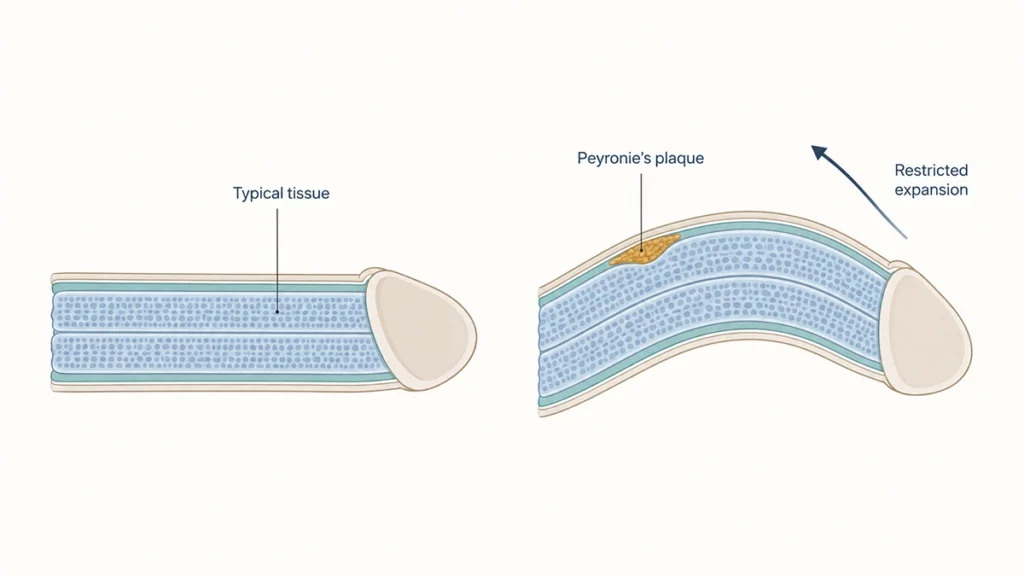
Peyronie’s disease often begins with local inflammation inside the penis. Over time, this area may form a firm, less flexible plaque. The plaque prevents part of the shaft from expanding normally during an erection, which creates curvature, narrowing or shortening.
The direction of the bend often relates to the plaque’s location. For example, a plaque on the upper surface may produce an upward curve, while a plaque underneath may cause a downward bend. Plaques at the side can cause lateral curvature. In some men, scar tissue around the shaft creates an indentation or hourglass appearance instead.
The condition affects men differently. Some have mild symptoms that stabilise without active treatment. Others develop pain, a significant deformity or erection problems that interfere with sex. For this reason, treatment should focus on the individual’s symptoms, stage of disease and priorities rather than the angle alone.
Symptoms of Penile Curvature
The bend itself may be the most obvious sign, but penile curvature can cause several physical and emotional symptoms.
Common symptoms include:
- A new or increasing curve during erection
- A hard lump, flat plaque or thickened area in the shaft
- Pain in the penis, particularly during erections
- Loss of penile length
- Narrowing, indentation or an hourglass deformity
- A hinge effect, where part of the erect penis feels unstable
- Difficulty with penetration
- Pain or discomfort for the man or his partner during sex
- Difficulty getting or maintaining an erection
- Anxiety, reduced confidence or avoidance of intimacy
Not every man experiences all these symptoms. Furthermore, the size of a plaque does not necessarily predict the degree of curvature. A relatively small plaque can still produce a troublesome bend depending on its position.
How Is Penile Curvature Diagnosed?
Diagnosis starts with a private discussion about the symptoms and how they affect daily life. Your urologist may ask:
- When you first noticed the curve
- Whether it has changed over time
- Whether erections are painful
- Whether you can feel a lump or firm area
- Whether the shape affects penetration
- Whether you have difficulty getting or keeping an erection
- Whether you remember an injury
- Whether you have diabetes, cardiovascular risk factors or Dupuytren’s contracture
The specialist will usually examine the penis while it is soft to look for a plaque and assess penile length. Because curvature appears most clearly during erection, the urologist may ask you to provide private photographs taken at home from specific angles. In other cases, the clinic may create an erection using medication so the specialist can measure the curve accurately.
An ultrasound scan can sometimes show the plaque, calcium deposits or blood flow. However, not every patient needs a scan. CT and MRI scans do not usually form part of a routine assessment.
A careful assessment also helps the urologist understand your priorities. For example, pain may be the main concern during the early stage, while curvature, shortening or erection quality may become more important once the condition stabilises.
Penile Curvature Treatment Options
The right treatment depends on the cause, severity, stage and impact of the curve. Therefore, two men with a similar angle may receive different recommendations. When discussing penile curvature causes and treatment, a specialist should consider pain, erectile function, penile length, the type of deformity and the patient’s goals.
Observation and Reassurance
If the curve is mild, stable and does not interfere with sex, active treatment may not be necessary. Instead, your urologist may recommend monitoring the condition and returning if pain, shape or erectile function changes.
Observation does not mean that your concerns have been dismissed. Rather, it avoids the side effects and limitations of treatment when symptoms do not justify intervention.
Medicines for Pain or Erectile Dysfunction
During the active phase of Peyronie’s disease, a clinician may recommend anti-inflammatory pain relief where appropriate. However, tablets have generally shown limited ability to remove a plaque or straighten the penis.
If erectile dysfunction is present, medicines such as sildenafil or tadalafil may improve erection quality. They do not physically straighten the penis, but a firmer erection may improve sexual function. Always seek medical advice before taking medication, especially if you use nitrate medicines or have certain heart conditions.
Penile Traction and Vacuum Devices
Penile traction devices apply a controlled stretching force over time. Vacuum erection devices use negative pressure to draw blood into the penis. These options may help some men preserve length or reduce deformity, either alone or alongside another treatment.
However, they require regular use for several months, and results vary. Evidence remains limited, particularly for complex or heavily calcified plaques. Therefore, use a device only after a urology professional has explained which type to use, how long to use it and how to avoid injury. Do not forcefully bend or stretch the penis yourself.
Plaque Injections
Specialists in some countries use injections into the plaque to reduce curvature. Available substances and evidence vary. Collagenase injections, for example, are no longer available for Peyronie’s disease in the UK because the manufacturer withdrew the treatment from the European market. Other injection treatments may have limited or evolving evidence, so availability and suitability require specialist discussion.
Shockwave Treatment
Extracorporeal shockwave treatment may reduce penile pain during the active phase for some men. However, current European guidance advises that clinicians should not use it to improve the curve itself because studies have not shown a reliable effect on curvature or plaque size.
This distinction is important. A treatment may ease one symptom without correcting the underlying deformity.
When Is Surgery Considered?
Surgery may be appropriate when a stable curve prevents or significantly disrupts sexual intercourse, causes substantial bother, or has not responded to suitable conservative measures. Surgeons usually wait until pain has settled and the shape has remained stable for several months. In many cases, this means waiting at least 9 to 12 months from the start of Peyronie’s disease.
The aim is to create a functionally straight penis that allows comfortable sexual activity. Surgery cannot always restore the penis to its exact appearance, length or sensation before the condition developed.
Penile Plication or a Nesbit-Type Procedure
Plication shortens or gathers the longer side of the penis, opposite the curve, to bring the shaft into a straighter position. A modified Nesbit procedure works on the same principle.
This approach often suits men who have good erections, enough penile length and a less complex deformity. It offers reliable straightening and generally carries a lower risk of erectile dysfunction than grafting. However, it will cause some shortening, and stitches may remain palpable beneath the skin.
Plaque Incision and Grafting
For a severe curve, marked shortening or a complex hourglass or hinge deformity, the surgeon may release the tight scarred side and cover the resulting gap with a graft. This approach aims to limit further shortening, although it does not necessarily restore lost length.
Grafting involves more complex surgery and carries a higher risk of erectile dysfunction or altered sensation than plication. Consequently, the surgeon must assess erection quality carefully before recommending it.
Penile Prosthesis
If a man has significant curvature together with erectile dysfunction that has not responded to medication, a penile prosthesis may provide rigidity and help straighten the penis. The surgeon may also perform additional modelling or corrective steps during the same operation if curvature remains.
Every operation has potential risks, including bleeding, infection, shortening, altered sensation, erectile problems, residual or recurrent curvature and dissatisfaction with the result. A detailed consultation allows you to compare these risks with the expected functional benefit.
For UK patient information about available procedures, see the British Association of Urological Surgeons guidance on Peyronie’s disease.
Surgery for Congenital Penile Curvature
Medicines, injections and traction cannot correct the underlying tissue difference that causes congenital curvature. Therefore, surgery offers the definitive treatment when congenital curvature creates functional difficulty or significant distress. Plication or a Nesbit-type procedure may be considered, depending on the direction and severity of the curve.
When Should You See a Urologist?
Arrange a routine appointment if you notice a new bend, increasing curvature, a firm lump, painful erections, penile shortening or difficulty with sex. You should also seek help if changes to the penis cause anxiety, low mood or relationship difficulties. These effects form a genuine part of the condition and deserve attention.
Seek urgent medical care if:
- You hear or feel a snap or pop during an injury to an erect penis
- The erection disappears immediately after an injury
- Severe bruising, swelling or pain develops rapidly
- You see blood at the opening of the penis or in the urine after an injury
- You cannot pass urine
The NHS advice on Peyronie’s disease also recommends medical review for a hard penile lump, a marked curve, painful erections or erection difficulties that make sex difficult.
Concerned About Penile Curvature?
Do not let embarrassment prevent you from seeking help. A confidential specialist assessment can identify the likely cause and explain whether monitoring, non-surgical care or an operation offers the most appropriate next step.
Frequently Asked Questions
Can penile curvature go away on its own?
A mild natural or congenital curve usually remains much the same. With Peyronie’s disease, pain may improve as the active phase settles, but the remaining curvature often persists. Some men experience partial improvement, while others remain stable or worsen. Therefore, do not rely on spontaneous recovery if the curve is progressing or affecting function.
Does every curved penis mean Peyronie’s disease?
No. A mild curve may represent normal variation, while a curve that has been present since puberty may be congenital. Peyronie’s disease more often produces a new or changing bend in adulthood, sometimes with pain, a palpable plaque, shortening or indentation.
At what degree does penile curvature need treatment?
There is no single angle that automatically requires treatment. The effect on comfort, penetration, erection quality and wellbeing matters more than the number alone. A pronounced curve may cause little difficulty for one man, while a smaller but complex hinge or hourglass deformity may seriously affect another.
Can tablets straighten penile curvature?
Tablets have not shown reliable results for straightening established Peyronie’s curvature. However, medicine may help manage pain during the active phase or improve accompanying erectile dysfunction. A urologist can explain the realistic purpose of each treatment.
Can a vacuum pump straighten the penis?
A medically recommended vacuum device may help preserve length or reduce deformity in some men when used consistently. However, evidence remains limited and results vary. Incorrect or excessive use can cause injury, so seek professional guidance before starting.
Is penile straightening surgery successful?
Surgery can achieve a functionally straighter penis for many carefully selected patients. However, the result depends on the original curve, penile length, erection quality and chosen procedure. Surgery also carries risks, so a specialist should explain the likely benefits and trade-offs for your individual case.
Final Thoughts
Penile curvature may reflect normal anatomy, a congenital difference or an acquired condition such as Peyronie’s disease. A mild, lifelong curve that causes no problems may need only reassurance. In contrast, a new or worsening bend, painful erection, hard plaque, shortening or difficulty with intercourse deserves medical assessment.
Several options can help. Depending on the cause and stage, these may include observation, pain relief, treatment for erectile dysfunction, traction or vacuum therapy, and surgery for stable, functionally significant curvature. The most suitable approach depends on your symptoms, erection quality and personal priorities.
The key message is simple: do not struggle in silence. Penile curvature is a recognised urological concern, and a confidential assessment can give you a clear diagnosis and a realistic treatment plan.
This content is for general information only and should not be used as a substitute for personalised medical advice. Please speak to a qualified healthcare professional.
*This content is for general information only and should not be used as a substitute for personalised medical advice. Please speak to a qualified healthcare professional.
Ready To Book an Appointment?
Share your details with us and we’ll be in touch to arrange your consultation.