
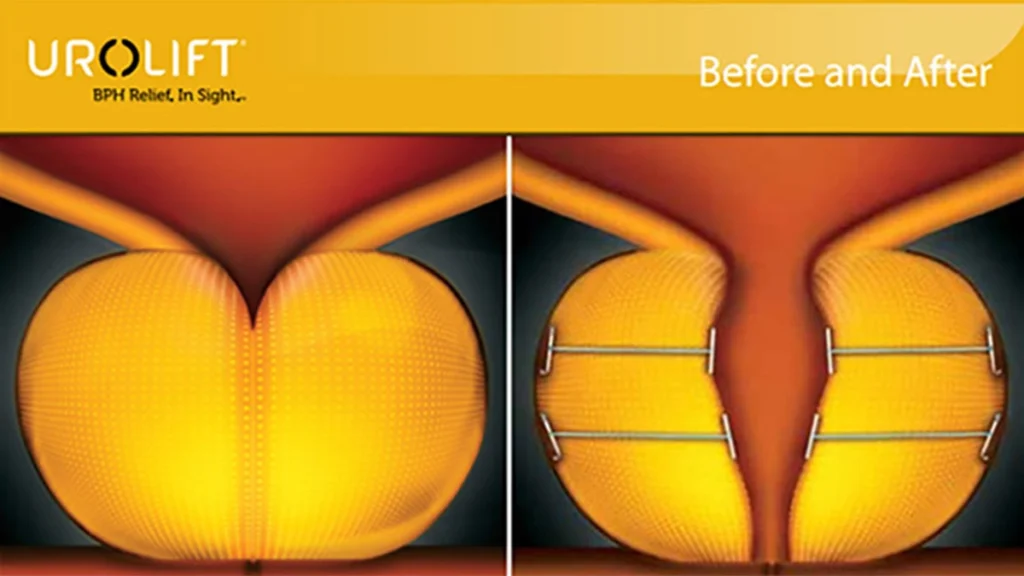
The development of lower urinary tract symptoms (LUTS) associated with benign prostatic hyperplasia (BPH) is a common condition that can significantly impact quality of life. As men age, the prostate tends to enlarge – a process known as benign prostatic enlargement (BPE) – which can obstruct the bladder outlet.
In the UK, more than one third of men over the age of 50 are affected by moderate or severe urinary symptoms, primarily due to bladder outflow obstruction (BOO). This amounts to approximately 3.4 million men, a figure that is expected to rise with an ageing population.
Current Management of Bladder Outflow Obstruction
Men with urinary symptoms attributed to BOO often experience these issues for many years before seeking medical assistance. Initial management usually consists of lifestyle modifications and pharmacological therapies.
However, a significant proportion of patients require surgical intervention either due to the severity of their symptoms or lack of response to conservative measures.
In recent years, a variety of minimally invasive surgical treatments (MISTs) have emerged, gradually replacing the traditional approach of transurethral resection of the prostate (TURP). This broader spectrum of treatment options necessitates specialist evaluation and more comprehensive patient counselling.
Why UroLift Is an Effective Option for BPO
The UroLift system is a minimally invasive, day-case procedure used to treat lower urinary tract symptoms caused by an enlarged prostate (BPH). It works by using small, permanent implants to pull excess prostatic tissue away from the urethra, widening it without cutting, heating, or removing tissue. Key advantages include fast, often lasting, symptom relief, minimal downtime, and preservation of sexual function.
The UroLift system has been endorsed by NICE (NICE guidance -https://www.nice.org.uk/guidance/htg578)) as a day case alternative to conventional procedures such as TURP and laser therapy.
Key Aspects of UroLift:
- Procedure: A surgeon inserts a delivery device through the urethra to place 2-4 implants, pulling the prostatic lobes apart.
- Benefits: This technique avoids the risk of complications associated with traditional surgery (like TURP), such as erectile dysfunction or ejaculatory dysfunction.
- Recovery: Most patients do not require a catheter afterwards and can return to normal activities quickly.
- Side Effects: Temporary (1-2 weeks) side effects may include blood in the urine, urgency, frequency, and mild pain.
- Suitability: It is ideal for men looking to avoid medication side effects or major surgery, but not suitable for those with significant, untreated bleeding disorders.
Alternatives and Cost:
- Alternatives: Options include medication, lifestyle changes, Rezum water vapor therapy, or traditional surgeries like TURP or laser.
- Cost: Private treatment often costs upwards of £6,000 in the UK.
The procedure is highly effective at improving urinary flow and reducing BPH symptoms, often providing a “night-and-day” difference within a few weeks.
Delivering UroLift as a Walk-In, Walk-Out Procedure
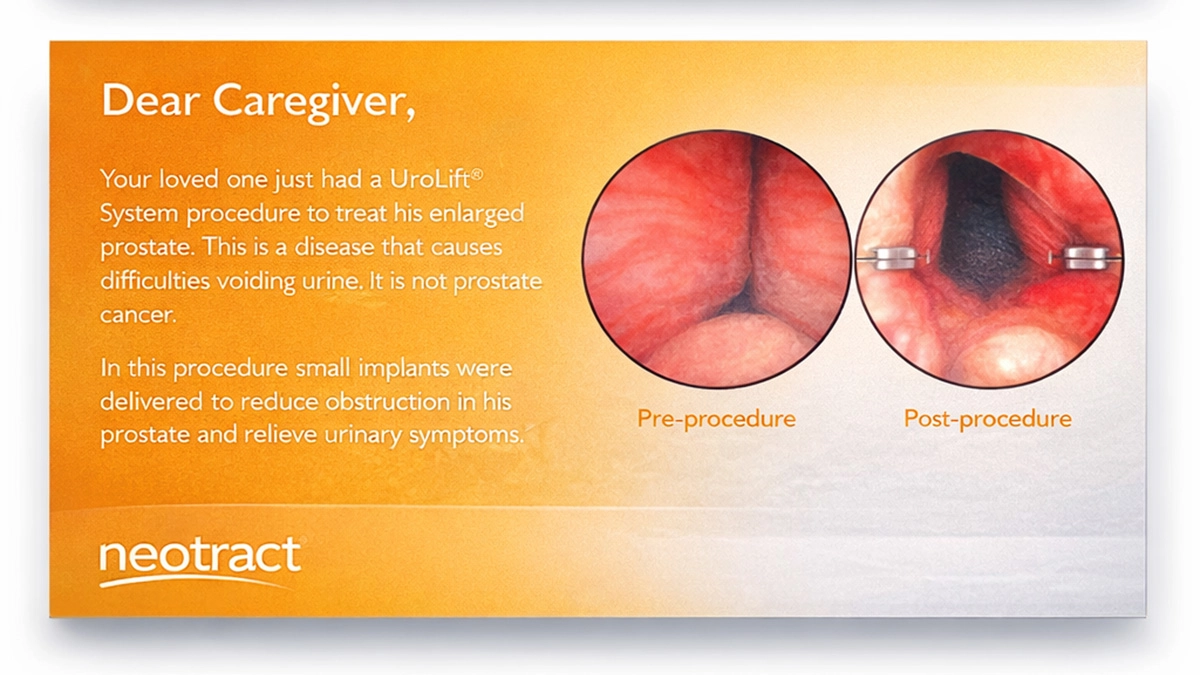
Initially, UroLift was introduced as a day case procedure performed in theatre. However, it was soon recognised that by adopting a local anaesthetic protocol and facilitating rapid discharge, the procedure could be relocated to an outpatient setting. This transition released valuable theatre capacity for more urgent cases.
The following case study outlines the steps taken to establish a local protocol for UroLift in the Sherwood area, transforming the care pathway, enhancing efficiency, and maintaining high standards of care for men with BPH.
UroLift is now incorporated into the NHS Sherwood Forest Hospital standard operating procedure (SOP) as a walk-in walk-out intervention in the Day Treatment Unit under local anaesthesia.
Pathway Development and Outcomes
- Developed a pathway and anaesthetic protocol for shifting UroLift from the main theatre to a day case walk-in walk-out format.
- Established UroLift as a day case procedure in accordance with NICE guidance.
- Freed up inpatient bed and theatre capacity.
- Created a local anaesthetic protocol that does not require the presence of an anaesthetist.
- Collected data to evaluate procedural and patient outcomes with local anaesthetic for UroLift.
- Established an ambulatory pathway for patient care.
Range of NICE Approved Treatments for Bladder Outlet Obstruction
- Monopolar or bipolar transurethral resection of the prostate (TURP)
- Transurethral vaporisation of the prostate
- Holmium laser enucleation of the prostate
- Transurethral incision of the prostate
- Water vapour therapy
- Prostate artery embolisation
- Prostatic urethral lift [UroLifts]
Relevant Guidance
Guidance the shared learning relates to: