
Foreskin problems in adults are more common than many men realise. However, because symptoms can feel embarrassing or difficult to talk about, many men delay asking for help. This can allow discomfort, tightness, inflammation or infection to worsen over time.
The foreskin is the fold of skin that covers the head of the penis. In some men, it moves back easily and causes no problems. In others, it can become tight, sore, cracked, swollen, infected or difficult to retract. These symptoms may affect passing urine, sexual activity, hygiene and confidence.
Although some foreskin problems settle with simple treatment, others need medical assessment. In particular, symptoms that keep returning, get worse, cause pain during sex or affect urination should not be ignored.
This guide explains the common causes of foreskin problems in adults, the symptoms to look out for and when to seek specialist urology advice.
- What Are Common Foreskin Problems in Adults?
- Phimosis: A Tight Foreskin in Adults
- Paraphimosis: When the Foreskin Gets Stuck
- Balanitis: Inflammation of the Penis and Foreskin
- Frenulum Breve: A Short Tight Band Under the Foreskin
- Lichen Sclerosus and BXO
- What Causes Foreskin Problems in Adults?
- When to Seek Urgent Help
- Treatment Options for Foreskin Problems in Adults
- Can Foreskin Problems Be Prevented?
- Foreskin Problems and Sexual Health
- Could Foreskin Symptoms Be a Sign of Cancer?
- When Should You See a Urologist?
- Final Thoughts
You can also watch the related video here:
What Are Common Foreskin Problems in Adults?
Adult foreskin problems can develop gradually or appear suddenly. Some men notice a tight ring of skin. Others experience redness, soreness, itching, discharge, or skin splitting. In some cases, the foreskin becomes stuck behind the head of the penis, which needs urgent treatment.
Common foreskin problems in adults include:
- Phimosis, also known as a tight foreskin
- Paraphimosis, where the foreskin becomes trapped behind the head of the penis
- Balanitis, which is inflammation of the head of the penis
- Balanoposthitis, where both the head of the penis and foreskin are inflamed
- Frenulum breve, where the band of tissue under the penis is too short
- Recurrent infections or irritation
- Lichen sclerosus, also known as balanitis xerotica obliterans or BXO
- Skin changes, ulcers or lumps that need further assessment
These conditions can overlap. For example, repeated inflammation can lead to scarring, and scarring can make the foreskin tighter. As a result, a problem that starts as mild irritation may eventually cause pain, tearing or difficulty retracting the foreskin.
Phimosis: A Tight Foreskin in Adults
Phimosis means the foreskin is too tight to pull back fully over the head of the penis. In children, a tight foreskin can be normal. However, in adults, new or worsening tightness is more likely to be caused by scarring, inflammation, infection or an underlying skin condition.
Some men have mild tightness and no major symptoms. Others may find that the foreskin becomes painful during erections or intercourse. It may also be difficult to clean underneath the foreskin properly, which can increase the risk of irritation and infection.
Symptoms of phimosis may include:
- Difficulty pulling the foreskin back
- Pain when trying to retract the foreskin
- Tightness during erection
- Pain during sex
- Cracking or splitting of the foreskin
- Bleeding from small tears
- Ballooning of the foreskin when passing urine
- A weak urinary stream
- Repeated infections or inflammation
Phimosis can affect quality of life. It may cause anxiety around sex, make hygiene difficult and lead to repeated soreness. However, treatment is available, and the best option depends on the cause and severity.
Further Reading: https://www.nhs.uk/conditions/phimosis
Paraphimosis: When the Foreskin Gets Stuck
Paraphimosis is different from phimosis. In paraphimosis, the foreskin has been pulled back behind the head of the penis and cannot be brought forward again.
This can cause swelling, pain and reduced blood flow to the head of the penis. It is a medical emergency and needs urgent treatment.
Symptoms may include:
- A retracted foreskin stuck behind the head of the penis
- Swelling of the head of the penis
- Increasing pain
- Tight band of skin behind the glans
- Discolouration of the head of the penis
- Difficulty passing urine
If this happens, do not wait to see if it settles on its own. Seek urgent medical attention. Early treatment can often correct the problem more easily and reduce the risk of complications.
Balanitis: Inflammation of the Penis and Foreskin
Balanitis is inflammation of the head of the penis. It is more common in men who have a foreskin, particularly if the area under the foreskin becomes irritated, moist or difficult to clean.
Balanitis can cause redness, soreness, swelling, itching and discomfort. Some men also notice discharge, an unpleasant smell or pain when passing urine.
Common symptoms include:
- Redness around the head of the penis
- Swelling or tenderness
- Itching or burning
- Soreness under the foreskin
- Thick discharge
- Unpleasant smell
- Pain when passing urine
- Bleeding or small splits in the skin
Balanitis can be caused by infection, irritation or an underlying skin condition. For example, thrush can cause soreness and redness, especially in men with diabetes or men whose partners have recurrent thrush. Bacterial infection can also occur, particularly when moisture and discharge build up under a tight foreskin.
However, balanitis is not always due to poor hygiene. In fact, over-washing with harsh soaps, shower gels, or antiseptic products can irritate the delicate skin and worsen symptoms.
Further Reading: https://www.nhs.uk/conditions/balanitis
Frenulum Breve: A Short Tight Band Under the Foreskin
The frenulum is the small band of tissue on the underside of the penis that connects the foreskin to the head of the penis. In some men, this band is too short or tight. This is called frenulum breve.
It may cause pain when the foreskin is pulled back, especially during sex. Some men notice repeated tearing or bleeding during intercourse. Others feel a pulling sensation when the foreskin retracts.
Symptoms can include:
- Pain during sex
- Tearing or bleeding under the head of the penis
- Difficulty pulling the foreskin back fully
- A pulling or bending sensation during erection
- Anxiety around sexual activity
Treatment may involve simple measures in mild cases. However, if the frenulum repeatedly tears or causes significant discomfort, a minor surgical procedure may be considered.
Lichen Sclerosus and BXO
Lichen sclerosus is a long-term inflammatory skin condition. When it affects the male genital area, it can involve the foreskin, head of the penis and sometimes the opening of the urethra. It is also known as balanitis xerotica obliterans, or BXO.
This condition can cause white patches, scarring and tightening of the foreskin. Over time, it may lead to phimosis. In some men, it can also affect urination by narrowing the opening where urine exits.
Symptoms may include:
- White or pale patches on the foreskin or head of the penis
- Tightening of the foreskin
- Cracking or splitting
- Pain or soreness
- Itching
- Pain during sex
- Spraying or dribbling of urine
- Narrowing of the urinary opening
Lichen sclerosus should be assessed properly because it can cause long-term scarring. Treatment may involve prescription creams, careful monitoring or surgery if the foreskin has become significantly scarred.
Further Reading: https://www.nhs.uk/conditions/lichen-sclerosus
What Causes Foreskin Problems in Adults?
There is rarely one single cause. Instead, foreskin problems often develop because of a combination of skin irritation, infection, inflammation, scarring and individual risk factors.
Common causes include:
1. Repeated Inflammation
Repeated episodes of balanitis can make the foreskin sore and swollen. Over time, repeated inflammation may lead to small tears and scarring. This can make the foreskin tighter.
2. Infection
Fungal infections such as thrush can cause redness, soreness and itching. Bacterial infections can also cause swelling, discharge and pain. In some cases, sexually transmitted infections may cause symptoms around the penis or foreskin, so testing may be needed depending on the situation.
3. Skin Irritation
Strong soaps, scented shower gels, bubble baths, intimate washes, antiseptics and deodorants can irritate the skin. Some condoms, lubricants or spermicides may also trigger symptoms in sensitive skin.
4. Diabetes
Diabetes can increase the risk of infections, including fungal infections. Men with undiagnosed or poorly controlled diabetes may experience repeated balanitis or persistent irritation. Therefore, recurrent foreskin infections may sometimes lead to a check for diabetes.
5. Scarring
Small tears in the foreskin may heal with scar tissue. Scar tissue is less flexible than normal skin, so the foreskin can gradually become tighter.
6. Lichen Sclerosus
Lichen sclerosus can cause chronic inflammation and scarring. It is an important cause of adult phimosis and should be considered when the foreskin becomes progressively tight or develops white patches.
7. Hygiene Difficulties
A tight foreskin can make it difficult to clean underneath. This can lead to a build-up of moisture, skin cells and discharge. However, it is important to avoid aggressive cleaning, as harsh washing can make irritation worse.
When to Seek Urgent Help
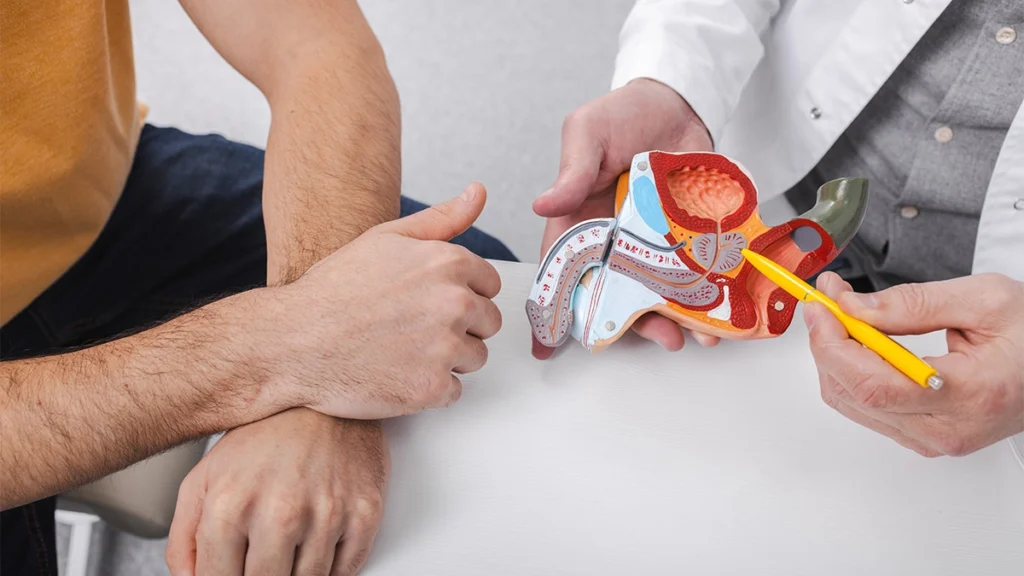
Some foreskin problems need urgent medical attention.
Seek urgent help if:
- The foreskin is stuck behind the head of the penis and will not move forward
- The head of the penis becomes very swollen or discoloured
- You cannot pass urine
- You have severe pain
- You have fever, spreading redness or feel generally unwell
- There is a rapidly worsening infection
Paraphimosis, in particular, should be treated as an emergency. Delaying treatment can increase swelling and make the problem harder to correct.
Suffering From Any of These Symptoms?
Share your details with us and we’ll be in touch to arrange your consultation.
Treatment Options for Foreskin Problems in Adults
Treatment depends on the cause. The aim is to reduce symptoms, treat infection or inflammation, prevent recurrence and preserve normal urinary and sexual function.
Gentle Hygiene and Avoiding Irritants
For mild irritation, simple measures may help. Wash with water or a mild, unperfumed product, and dry the area gently. Avoid perfumed soaps, harsh shower gels, antiseptic washes and intimate sprays.
If the foreskin retracts comfortably, gently clean underneath it. Then return the foreskin to its normal position. Never force the foreskin back if it is painful or very tight.
Antifungal or Antibiotic Treatment
If thrush or bacterial infection is suspected, treatment may involve antifungal cream, antibiotic cream or oral medication. The correct treatment depends on the cause, so persistent symptoms should be assessed rather than repeatedly self-treated.
Steroid Creams
In some cases of tight foreskin, a prescribed steroid cream may help reduce inflammation and improve flexibility. This is usually used for a defined period and with clear instructions. It is not suitable for every case, especially where there is significant scarring.
Treating Underlying Conditions
If diabetes, eczema, psoriasis, lichen sclerosus or another condition is contributing, treatment needs to address that underlying cause. Otherwise, symptoms may keep returning.
Circumcision
Circumcision involves removing the foreskin. It may be recommended when the foreskin is severely tight, scarred, repeatedly infected or affected by lichen sclerosus. It may also be considered when other treatments have not worked.
For many men, circumcision can provide long-term relief from recurrent foreskin problems. However, the decision should be made after a proper discussion about benefits, risks, recovery and alternatives.
Other Minor Procedures
Some men may be suitable for other procedures depending on the exact issue. For example, frenulum breve may be treated with a procedure to release or lengthen the frenulum. The right approach depends on examination findings and symptoms.
Can Foreskin Problems Be Prevented?
Not all foreskin problems can be prevented, especially if they relate to skin conditions or scarring. However, some simple habits may reduce the risk of irritation and infection.
Helpful steps include:
- Wash gently with water or mild, unperfumed products
- Avoid harsh soaps and scented products
- Dry the area carefully after washing
- Do not force the foreskin back
- Return the foreskin to its normal position after cleaning or sex
- Use condoms if there is a risk of sexually transmitted infection
- Seek help for recurrent thrush or balanitis
- Manage diabetes well if you have it
- Avoid self-treating persistent symptoms without medical advice
Good hygiene matters, but gentle hygiene matters more. Over-cleaning can be just as irritating as not cleaning enough.
Foreskin Problems and Sexual Health
Foreskin problems can affect sexual confidence. Pain, tearing, tightness and inflammation may make sex uncomfortable or stressful. Some men avoid intimacy because they worry about pain, bleeding or embarrassment.
It is important to know that these problems are treatable. Seeking help early can prevent symptoms from becoming more severe and can improve comfort during sex.
If there is any chance of a sexually transmitted infection, it is sensible to arrange testing. Symptoms such as discharge, ulcers, burning when passing urine or a new rash should be assessed promptly.
Could Foreskin Symptoms Be a Sign of Cancer?
Most foreskin problems are not cancer. However, persistent skin changes should always be checked.
You should seek medical advice if you notice:
- A lump on the penis or foreskin
- A sore or ulcer that does not heal
- Bleeding without an obvious cause
- Persistent crusting or thickened skin
- A change in colour of the skin
- Foul-smelling discharge that does not settle
- Ongoing pain or inflammation in one area
Penile cancer is rare, but early assessment is important. Do not assume that a persistent sore or lump is just infection or irritation.
When Should You See a Urologist?
You should consider seeing a urologist if symptoms are recurrent, severe, affecting sex, affecting urination or not improving with initial treatment.
A specialist review may be helpful if you have:
- Adult phimosis
- Recurrent balanitis
- Suspected lichen sclerosus or BXO
- Painful erections due to tight foreskin
- Repeated tearing or bleeding
- Frenulum breve
- Urinary spraying or narrowing
- Concerns about circumcision
- Unexplained lumps, ulcers or skin changes
A urologist can identify the cause and discuss treatment options clearly. This may include creams, further tests, minor procedures or circumcision where appropriate.
Final Thoughts
Foreskin problems in adults can be uncomfortable, frustrating and difficult to discuss. However, they are also common, and in most cases, effective treatment is available.
Do not ignore symptoms such as tightness, recurrent soreness, cracking, bleeding, painful sex, discharge or difficulty passing urine. These symptoms may settle with simple treatment, but they can also point to infection, scarring or an underlying skin condition that needs medical attention.
The key message is simple: seek help early. A proper assessment can reduce discomfort, prevent recurrence and protect urinary and sexual function.
If you are experiencing foreskin problems that are persistent, recurrent or affecting your quality of life, a specialist urology consultation can help identify the cause and guide the most appropriate treatment.
This content is for general information only and should not be used as a substitute for personalised medical advice. Please speak to a qualified healthcare professional.
*This content is for general information only and should not be used as a substitute for personalised medical advice. Please speak to a qualified healthcare professional.
Ready To Book an Appointment?
Share your details with us and we’ll be in touch to arrange your consultation.